
How to Fuel for the Uphill
Fueling For The Uphill
Elliott Baring, Baring Performance Management
Fueling properly is one of the most overlooked, and poorly executed, tools I see ski tourers missing out on. Whether you’re heading out for a multi-hour backcountry day, a hut trip or a few quick uphill laps at the resort, dialing in your nutrition is some low hanging fruit that immediately elevates your performance and recovery. If you start working on this early in the season, you’ll notice better workouts, smoother ski tours and far faster recovery - all of which compound as winter goes on.
You may also be a cyclist or trail runner in the warmer months and have noticed that “high carb” fueling has become more common in these sports. In my opinion, the fueling revolution over the last few years is one of the major reasons we’re seeing records fall across many endurance sports. The physiology is simple: for endurance athletes, carbohydrates (before, during and after exercise) are king.
-
Before: carbs top off your glycogen stores and fuel the work ahead.
-
During: carbs keep your energy levels high, stabilize blood glucose and ensure your body has the fuel to meet muscular demand.
-
After: carbs help replenish glycogen, jump-start recovery and get you ready to go again sooner.
Even at low to moderate intensities, like a long, conversational-pace backcountry tour, your body is still burning a significant amount of carbohydrate. As intensity rises, both energy expenditure and carbohydrate utilization rise dramatically, making proper fueling even more important when the pace ramps up.

Below are examples of how I fuel my own ski days based on these principles:
Short Workout (1-2 hours, higher intensity)
Think an individual skimo race or morning laps at Eldora. Target ~90 g of carbohydrate per hour. For a 2-hour session (~180 g total):
-
~90 g from drink mix in a 750 mL soft flask
-
Another 90 g from gels in a second soft flask (three x 30 g servings)
I prefer the Neversecond C30 gel as the consistency is ideal for winter: not thin enough to freeze, not thick enough to struggle with at high heart rates. I take roughly one gel every 30 minutes and sip my liquid flask every 15 minutes (the start of each climb is a great cue). Keep liquid flasks in a jacket pocket to prevent freezing and combine 3-4 gels in a smaller soft flask to make access easier and reduce the amount of empty wrappers you have to deal with.
Short Tour (1-2 hours, low to moderate intensity)
Target ~60 g of carbohydrate per hour. I’ll follow a similar protocol here with drink mix and gels and sometimes I will substitute bars if I think it will be easy to eat. The Neversecond C30 bars are some of my favorites - great flavor and a perfect consistency that does not freeze solid in colder temps.
-
~60 g of drink mix in a soft flask
-
Two gels (ex. one at 45 minutes, one at 90 minutes)
Long Tour (3+ hours, any intensity)
For longer days, I still aim for 90 g/hr, but shift toward more solid foods. Since the pace often fluctuates more on a long tour and breaks are natural, this can make eating easier. I like to aim for 300-400 calories per hour. My favorites include:
-
Dried mango
-
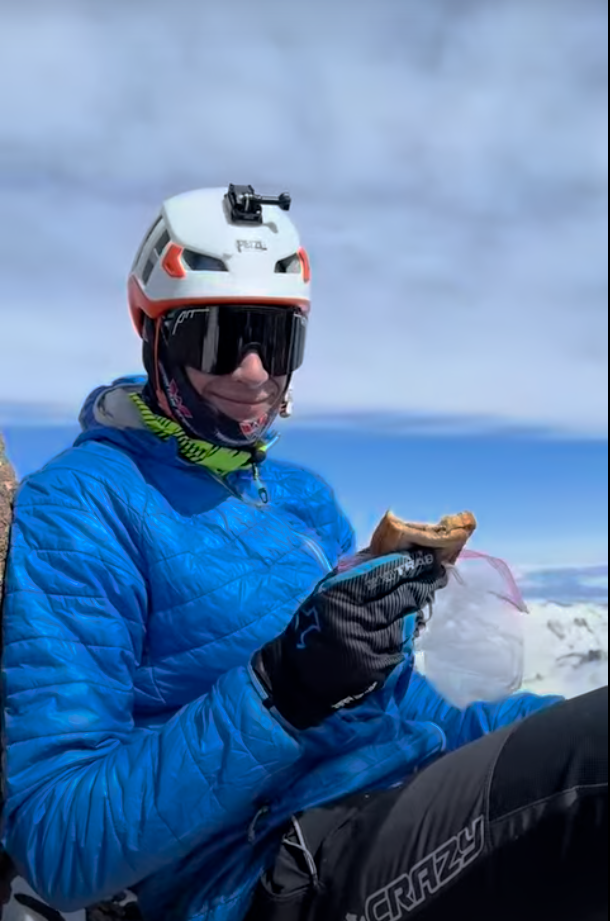
PB&J sandwiches
-
Nerds Gummy Clusters for a hit of fast sugar
-
Bars or snacks with a little protein or fat (usually fine at lower intensities)
I also keep electrolytes in my water (yes, you still sweat in winter) and will sometimes use a lighter drink mix. As always, experiment to discover what works best for you. One more key tip: time your fueling so that you’re eating right before you start skiing again. If you eat and then sit for 20-30 minutes before moving, your blood sugar can dip and you’ll feel like you’ve bonked. This happens because insulin has already shuttled that glucose out of your bloodstream without the immediate muscular demand to use it. A small snack right before you start climbing again keeps energy levels steady and prevents that mid-tour crash.
When you consistently give your body the carbohydrates it needs, everything improves: your pacing, your endurance, your decision-making, your recovery and ultimately, your enjoyment of the mountains. The skintrack feels smoother, the climbs feel steadier and the big days come easier. Dial this in early, practice it often and you’ll step into winter with the energy to ski harder, climb longer and have more fun every single day.


Leave a comment
This site is protected by hCaptcha and the hCaptcha Privacy Policy and Terms of Service apply.